He hears it before he sees it
The brief was to make him come to life and be endearing, so this round went after the three things that carry charm in an animal character: the ears, the knees, and the sound. A second parts sheet gave every leg a knee and separated the ears from the skull. Now his ears perk a tenth of a second before his head turns, he does the head tilt every dog owner knows, his jump has a real tuck, and for the first time you can hear his footsteps.
A second sheet: knees and ears
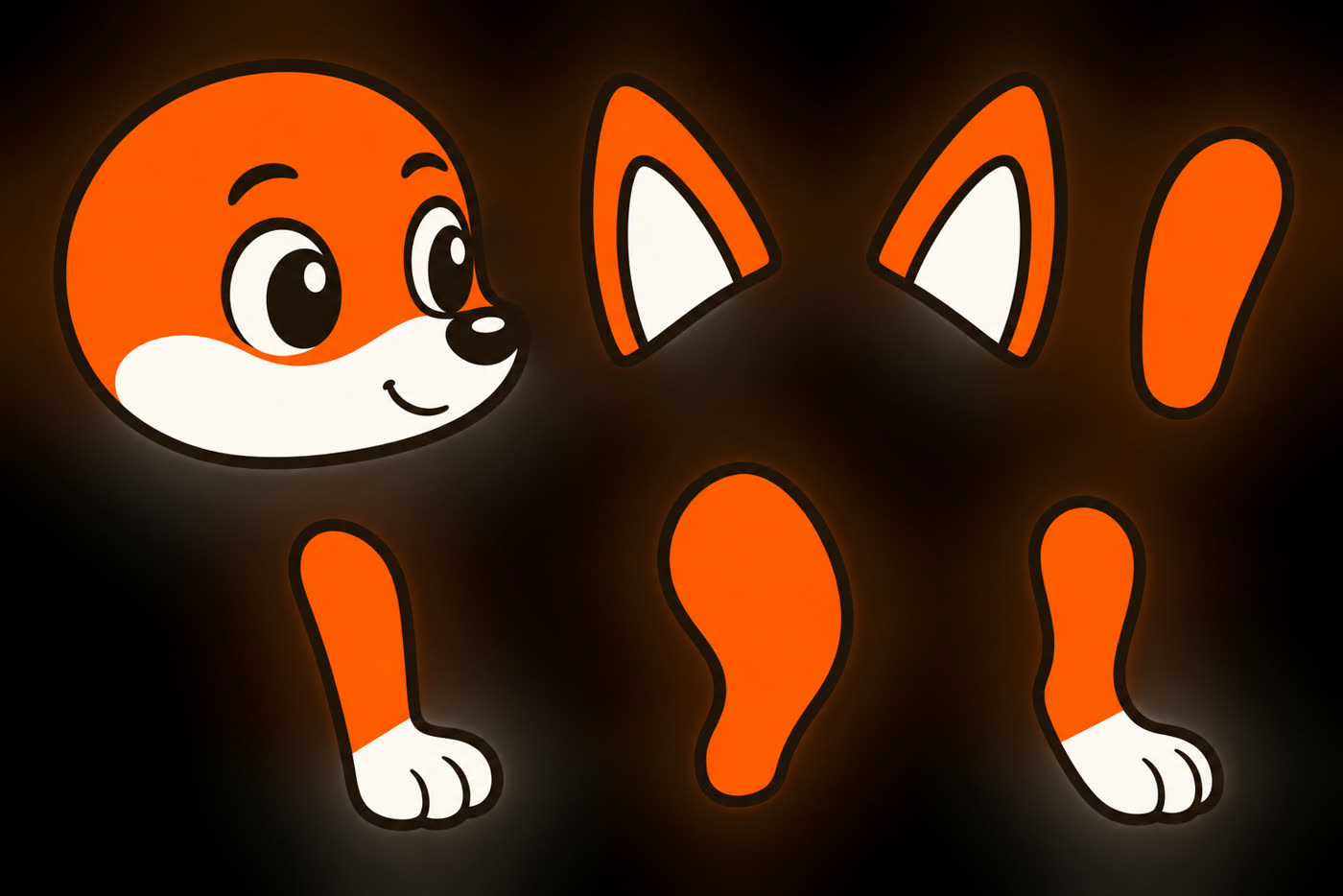
| What it buys | Where to see it |
|---|---|
| The bent-leg passing position | In every stride: the shin folds through the first half of the swing and reaches forward again before contact. This was the last visible gap in the v4 gait, and it is what makes the walk read as legs rather than pendulums. |
| The tuck | In the jump at nine seconds: all four shins fold in the air and extend for landing. A jump without a tuck is a lifted sticker. |
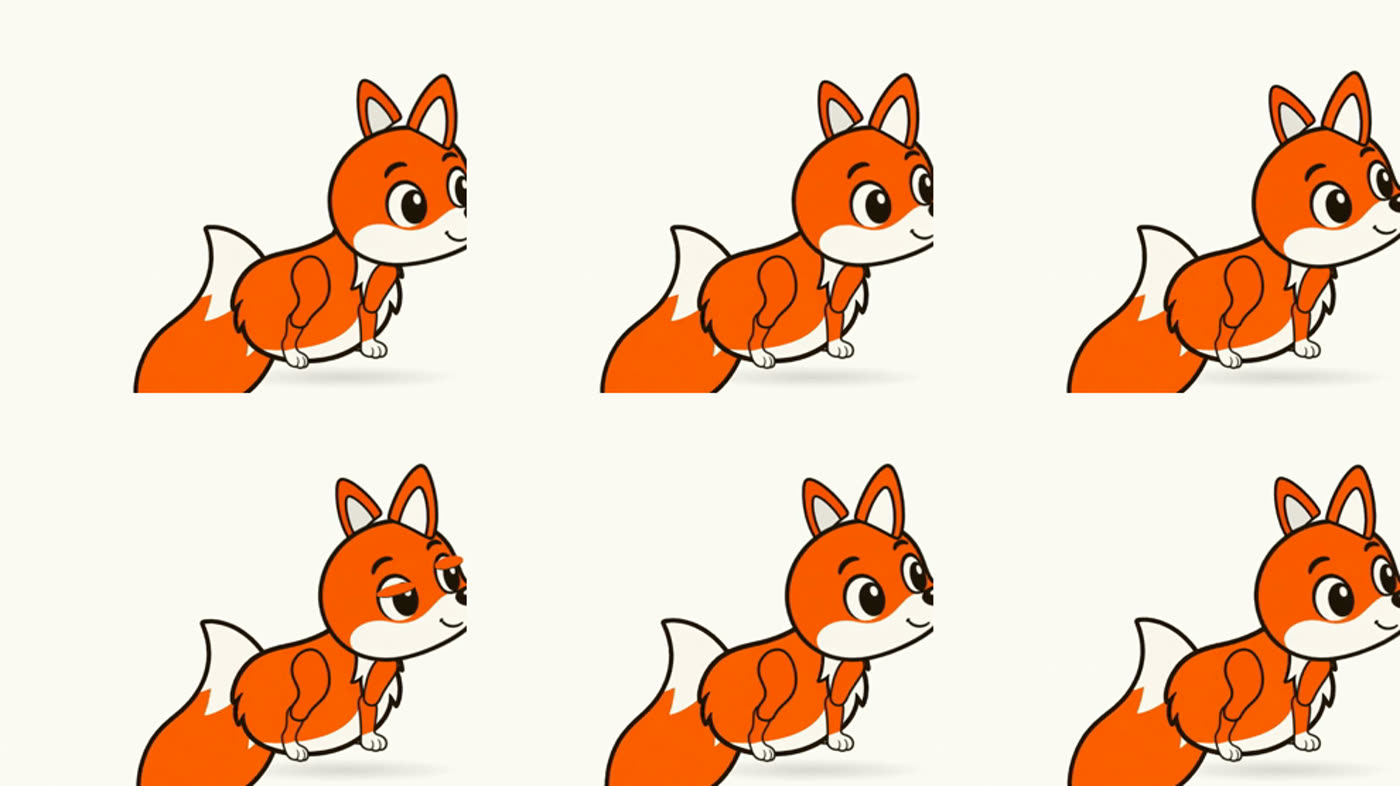
| The ear perk | At 8.95 seconds, the ears snap up a tenth of a second BEFORE the head turns to the answer. Attention lives in the ears, and the ears react first in a real animal. |
| The head tilt | At six seconds, the puppy tilt at the headline, with the ears hanging into the tilt on their own hinges a beat behind the skull. |
| The flick | At 14.1 seconds, one ear shakes something off in a triple twitch. It means nothing, which is exactly why it reads as an animal rather than a message. |
| The slow blink | At 20.6 seconds, the film ends on a long, deliberate, contented close of both eyes. Borrowed from cats: the I-trust-you blink. |
Thirty six events, synthesized from nothing
Three silent films in a row was a decision that had run out of road. But a launch film for an unlaunched product cannot lean on licensed sound, and downloaded effects have a way of sounding like a different film. So every sound here is synthesized locally: footfalls are pink noise through a low pass filter, back paws deeper than front paws; the typing is a 2.1 kilohertz tick at eight percent volume; the answer arrives on a two tone pop; the jump gets a band passed whoosh and a double pat on landing; and the wordmark lands on a three note ascending chime.
The footsteps follow the gait exactly, because they are computed from it.
Each footfall lands at the start of that leg's stance phase, so the audio times are derived from the same stride constants that drive the legs. Four feet on a 0.85 second stride gives a soft patter every 0.21 seconds, which is the true rhythm of a four beat walk. Nothing was placed by ear; if the gait changes, the footsteps move with it.
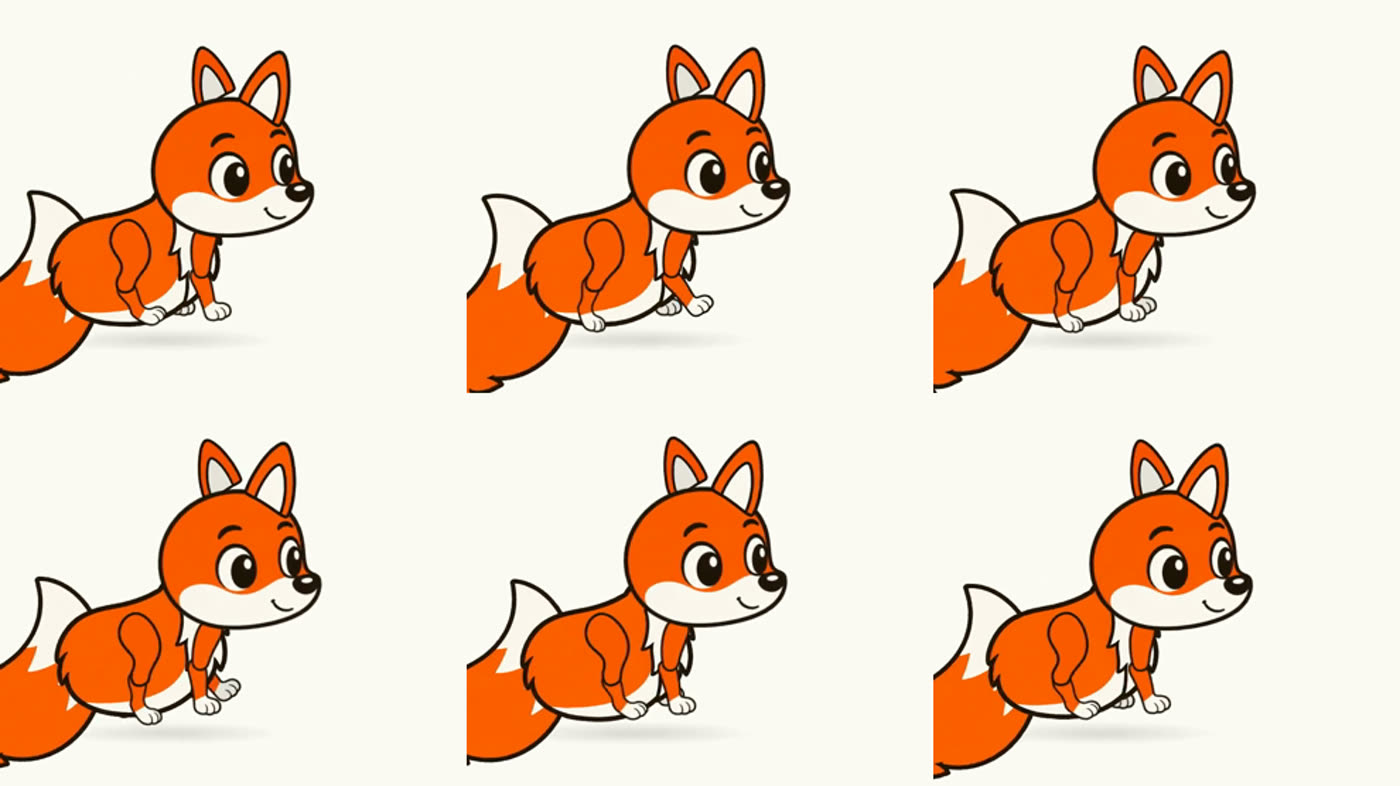
Not bigger motion. Smaller. The perk before the turn, the ears hanging into the tilt, the pointless flick, the slow blink at the end: every charming thing in this film is a small involuntary movement that serves no message. Charm is the character having reflexes, and reflexes are precisely the things a presenter would cut.
What was tried and cut
A sitting pose was built and rejected: with these parts the folded back leg reads as a pretzel, not a sit. A sit needs its own drawn thigh-over-shin shape, which goes on the next parts sheet. The lesson stands with the one from v3: the rig decides what the character can do, and when a pose fights the rig, the answer is a better part, not a cleverer transform.
NextWhat is left
- A voice. The film now has feet; it still has no narrator. Sixty seconds with a voice reading the three beats is the remaining distance to a real launch asset.
- The sit, drawn as its own part.
- A turn to camera from a three quarter parts sheet, so the slow blink can be aimed at the viewer.
Run on 22 August 2026 on an Apple M4 desktop. HyperFrames 0.8.8, headless Chrome and FFmpeg. Second parts sheet generated with gpt-image-2 at medium after a low probe, separated by connected components; nine layers now in the rig, four of them nested joints. Thirty six audio events synthesized with ffmpeg from sine and noise sources and mixed with per-event delays into one 22 second track that the renderer muxes. 660 frames, checker at zero errors, peak level -8.8 dB. Verified at 1280 and 390 with the house contrast audit.
Press Notes at the bottom right to mark up any block, or click any line to edit it directly.
Back to the topic · v4, the literature · v3, the rig · v2, the poses · v1, the pipeline · All explorations